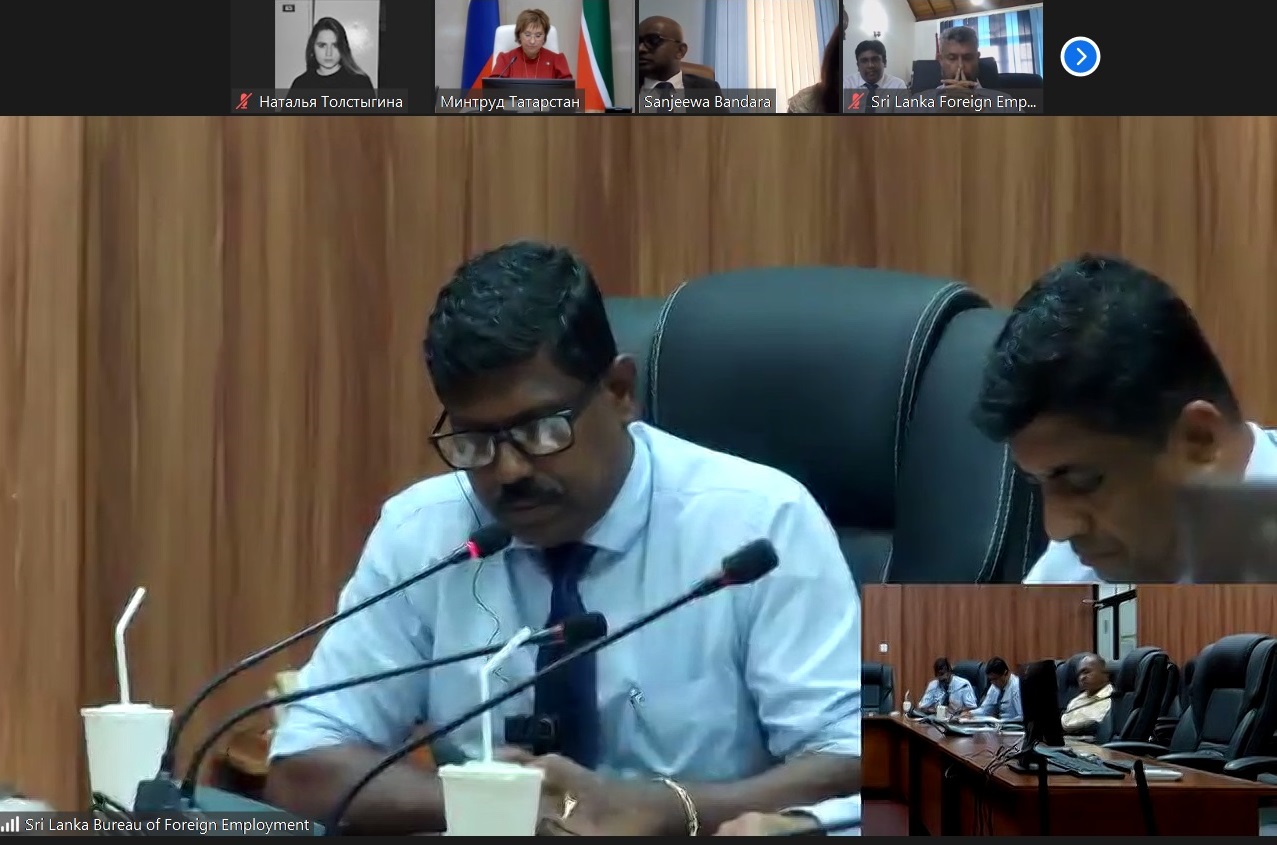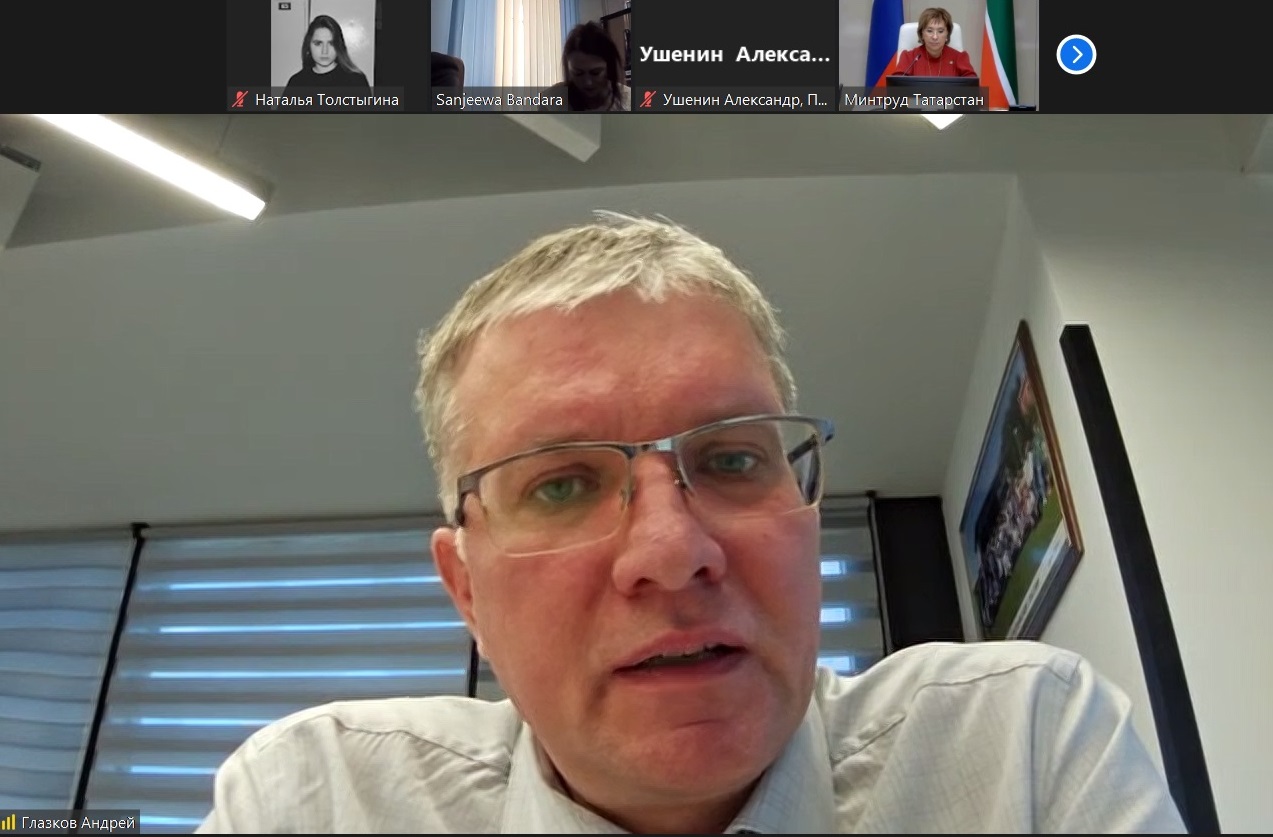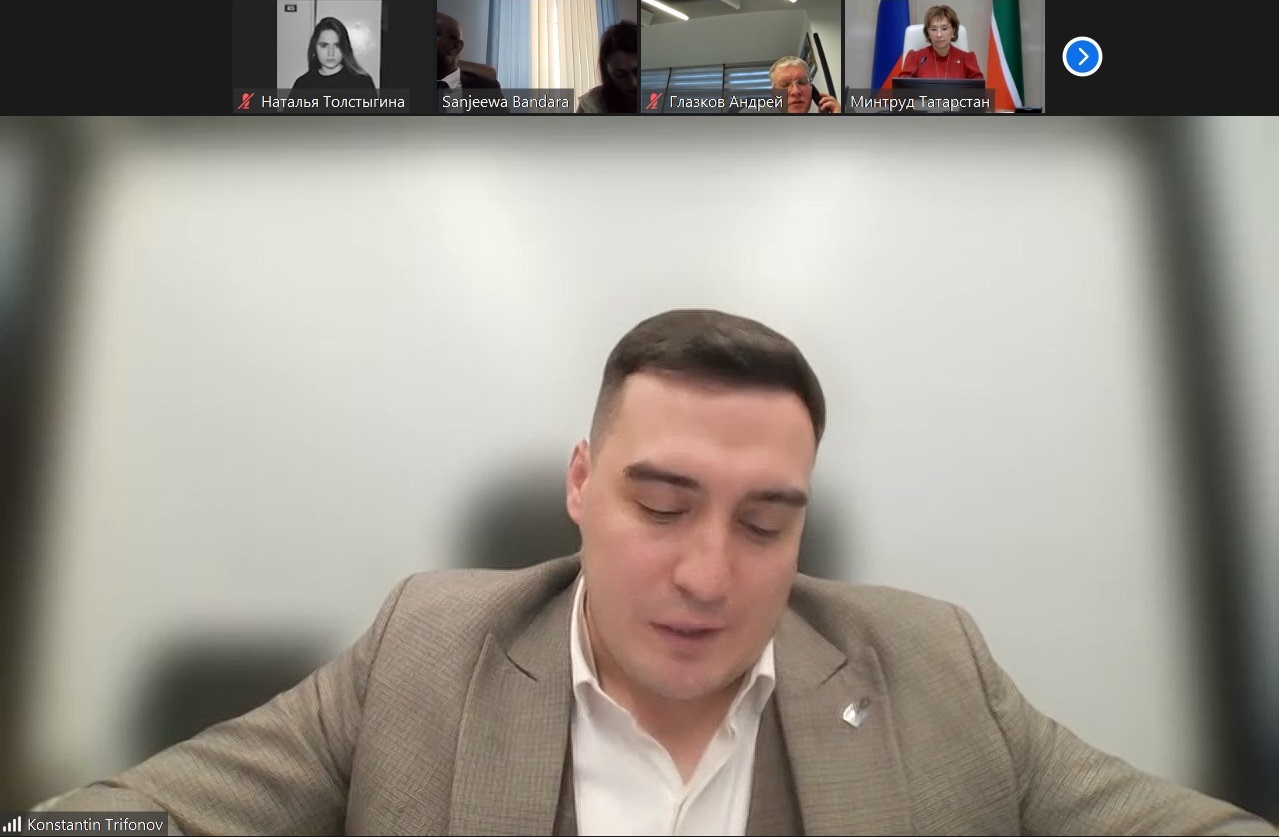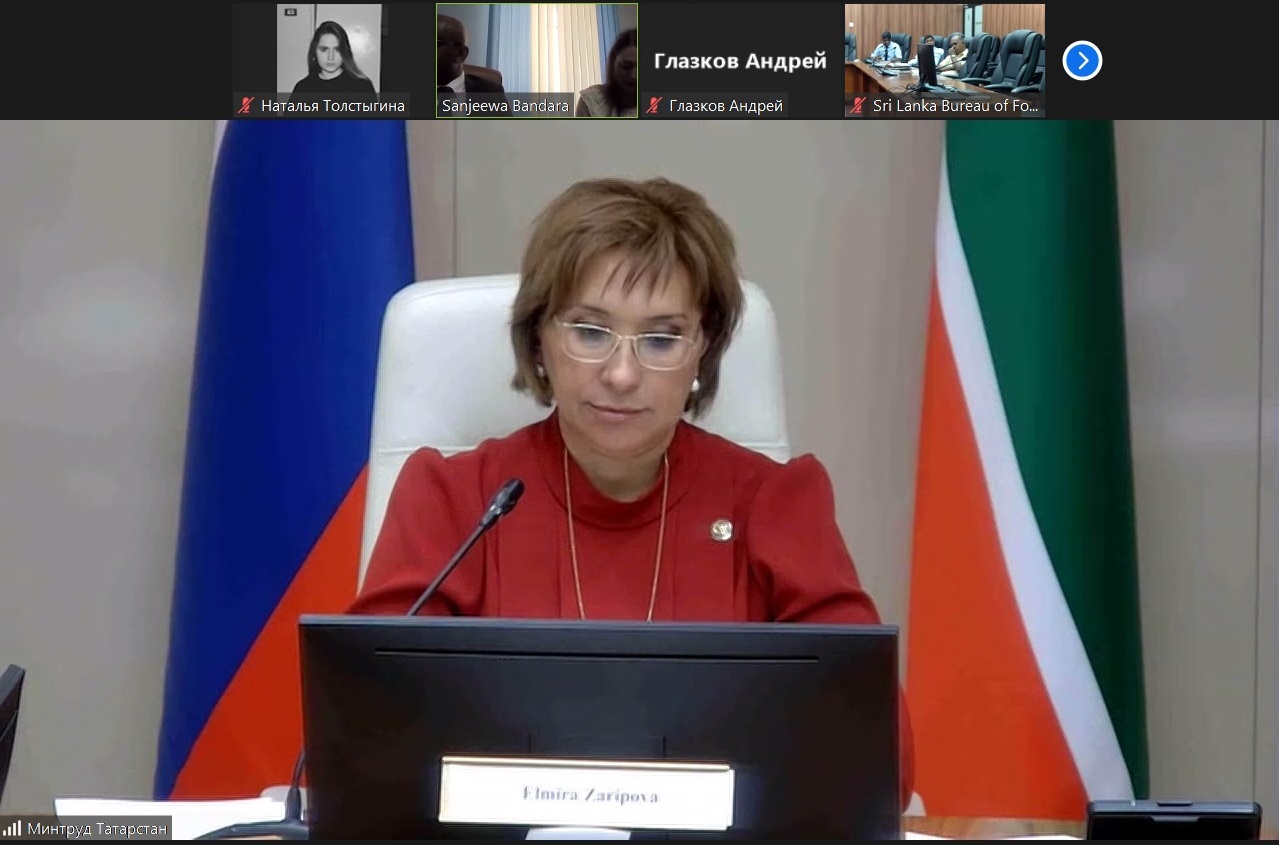
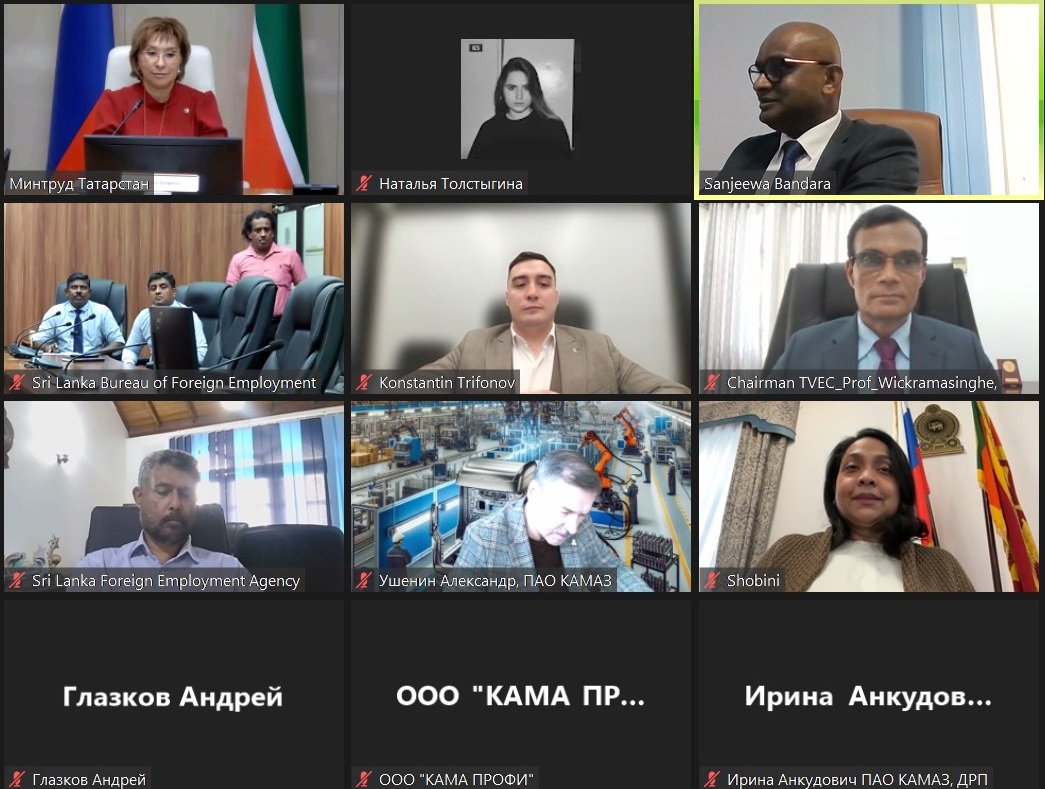
As a follow up to the high-level discussions between Hon. Rustam Minnikhanov, Rais (Head) of the Republic of Tatarstan and Ambassador Shobini Gunasekera, the Embassy of Sri Lanka in Moscow organized a virtual meeting with the Ministry of Labour, Employment and Social Protection of the Republic of Tatarstan to explore further employment opportunities for skilled and semi-skilled Sri Lankan workers in the region.
The meeting was co-chaired by Ambassador Shobini Gunasekera and Hon. Elmira Zaripova, Minister of Labour, Employment and Social Protection of the Republic of Tatarstan. The discussions focused on reviewing existing employment opportunities available to Sri Lankan workers in Tatarstan and identifying further possibilities to expand the recruitment of Sri Lankan personnel to meet the region's growing industrial and workforce requirements.
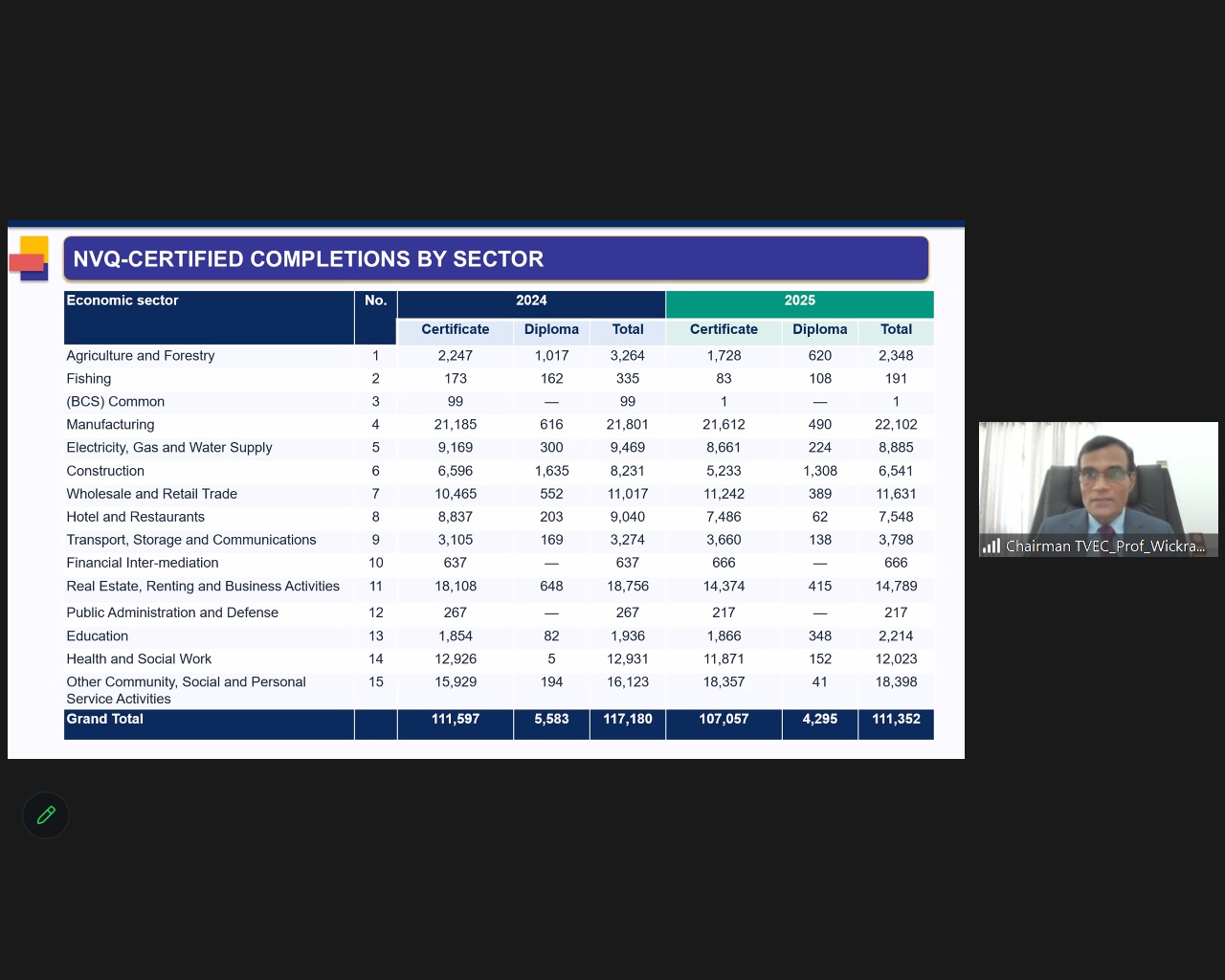
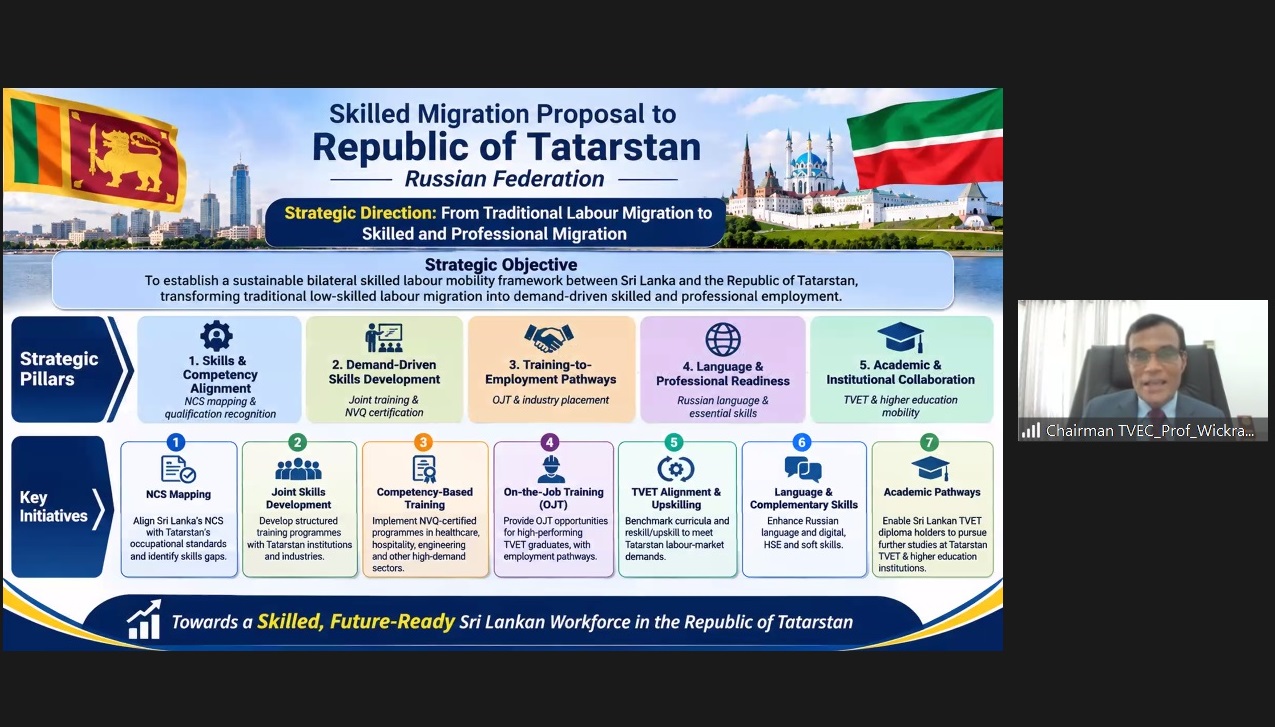
The Sri Lanka side highlighted the country's capacity to provide National Vocational Qualification (NVQ)-certified skilled and semi-skilled workers through the Sri Lanka Foreign Employment Agency, with appropriate pre-departure training tailored to the requirements of prospective employers. Such training would include basic Russian language proficiency as well as sector-specific technical skills to ensure that workers are adequately prepared for their respective assignments.
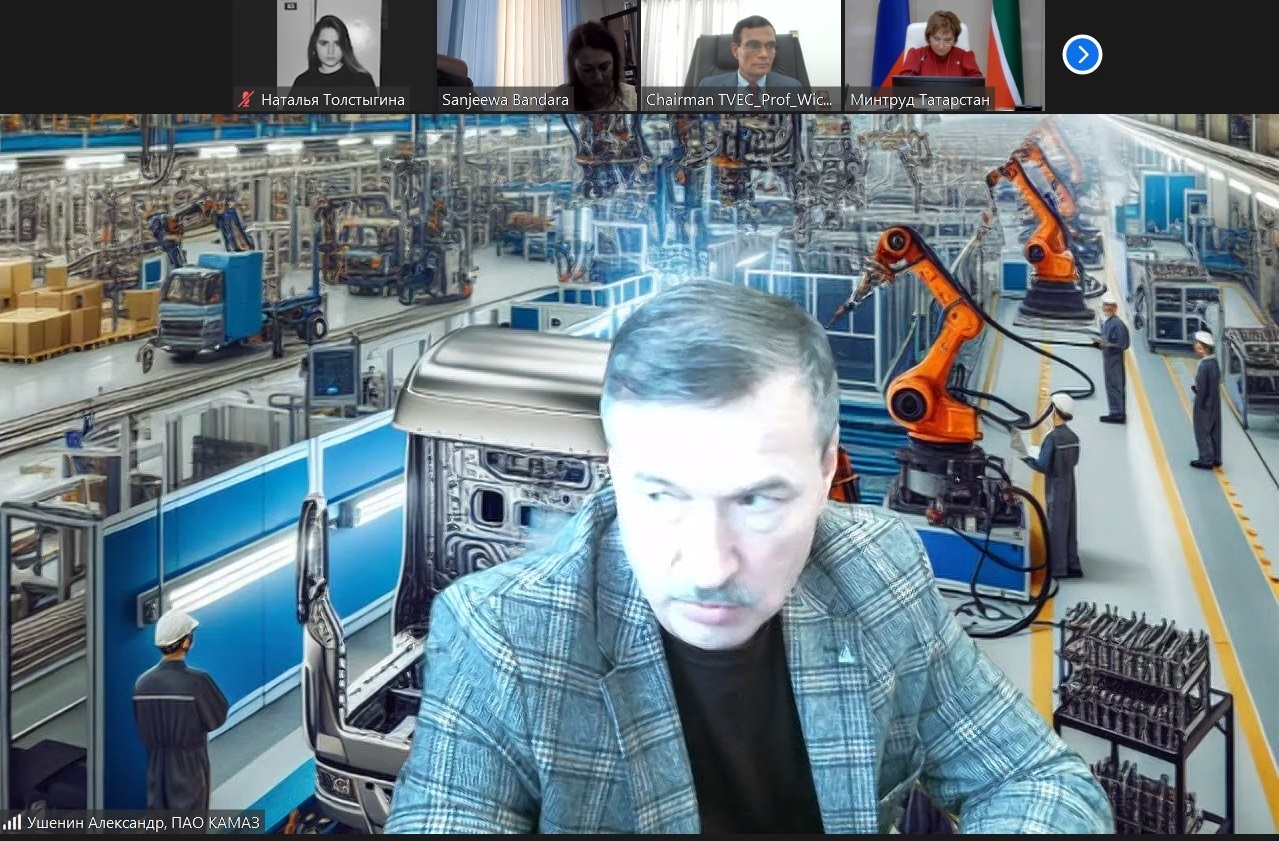
Three industrial enterprises from the Republic of Tatarstan were also represented at the meeting, providing an opportunity to discuss industry-specific workforce requirements and potential areas for cooperation directly with prospective employers.
The Sri Lanka side was represented by Mr. Senerath Yapa, Additional General Manager (International Affairs) of the Sri Lanka Bureau of Foreign Employment, Prof. (Eng.) Dharmasiri Wickramasinghe, Chairman of the Tertiary and Vocational Education Commission, and Mr. Lal Hettiarachchi, Chairman of the Sri Lanka Foreign Employment Agency.
The meeting marked a further step towards translating the high-level engagement between Sri Lanka and Tatarstan into practical cooperation in labour mobility. Both sides explored avenues for strengthening institutional coordination and establishing a structured approach to matching the skills and qualifications of Sri Lankan workers with the employment requirements of Tatarstan's industrial sector.